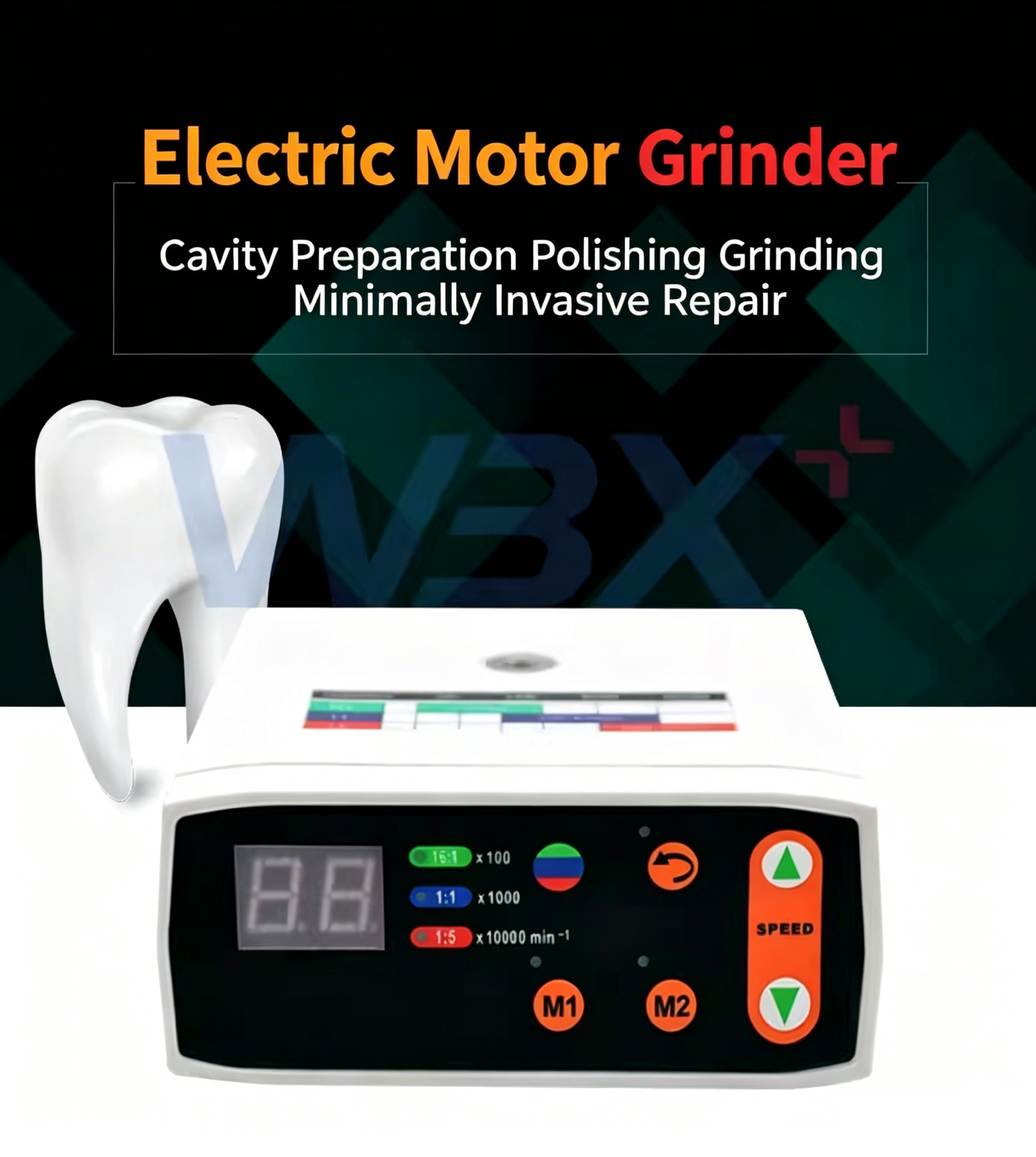
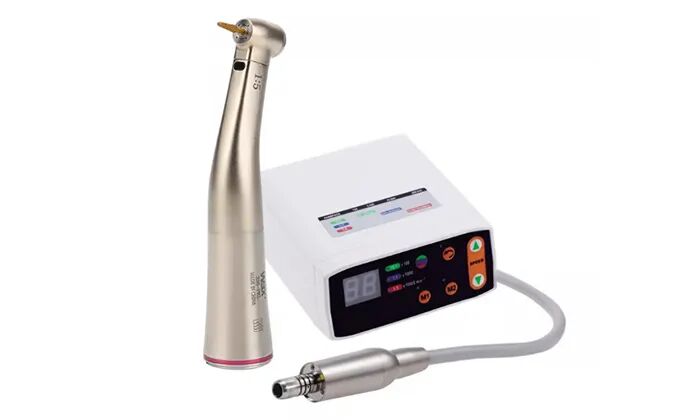
In modern dental diagnosis and treatment, the universality and precision of equipment are increasingly becoming important guarantees for clinical efficiency and treatment effectiveness. The external internal waterway electric motor, with its flexible interface design and multi-level speed ratio adjustment, achieves efficient adaptation to various dental mobile phones, providing stable and reliable technical support for different treatment scenarios.
Widely compatible interface system
This electric motor adopts a standard E-type interface design and has excellent universal compatibility. In clinical practice, various professional dental phones can be seamlessly connected, including fiber optic phones used for fine repair, speed increasing phones suitable for implantation and surgical procedures, and deceleration bending machines commonly used for marrow preparation and restoration adjustment. This design reduces the need for frequent replacement of the host in clinical practice, simplifies the equipment management process, and is particularly suitable for dental institutions that carry out multidisciplinary comprehensive treatment.
Precise adaptation of multi-stage transmission
The motor provides three adjustable speed ratios of 16:1, 1:1, and 1:5, each corresponding to different clinical needs:
16: 1. High reduction ratio: When used in conjunction with a reduction bending machine, it can provide high torque output and is suitable for operations that require fine control and large cutting forces, such as bone marrow preparation and crown preparation.
1: 1. Direct transmission: In conjunction with standard mobile phones, it achieves proportional output of rotational speed, suitable for most conventional dental preparation and restoration processes.
1: 5 Speed Increase Ratio: When connected to a speed increase phone, the rotational speed can be increased while ensuring torque, meeting the high requirements for rotational speed and accuracy in surgical scenarios such as implant preparation and microsurgery.
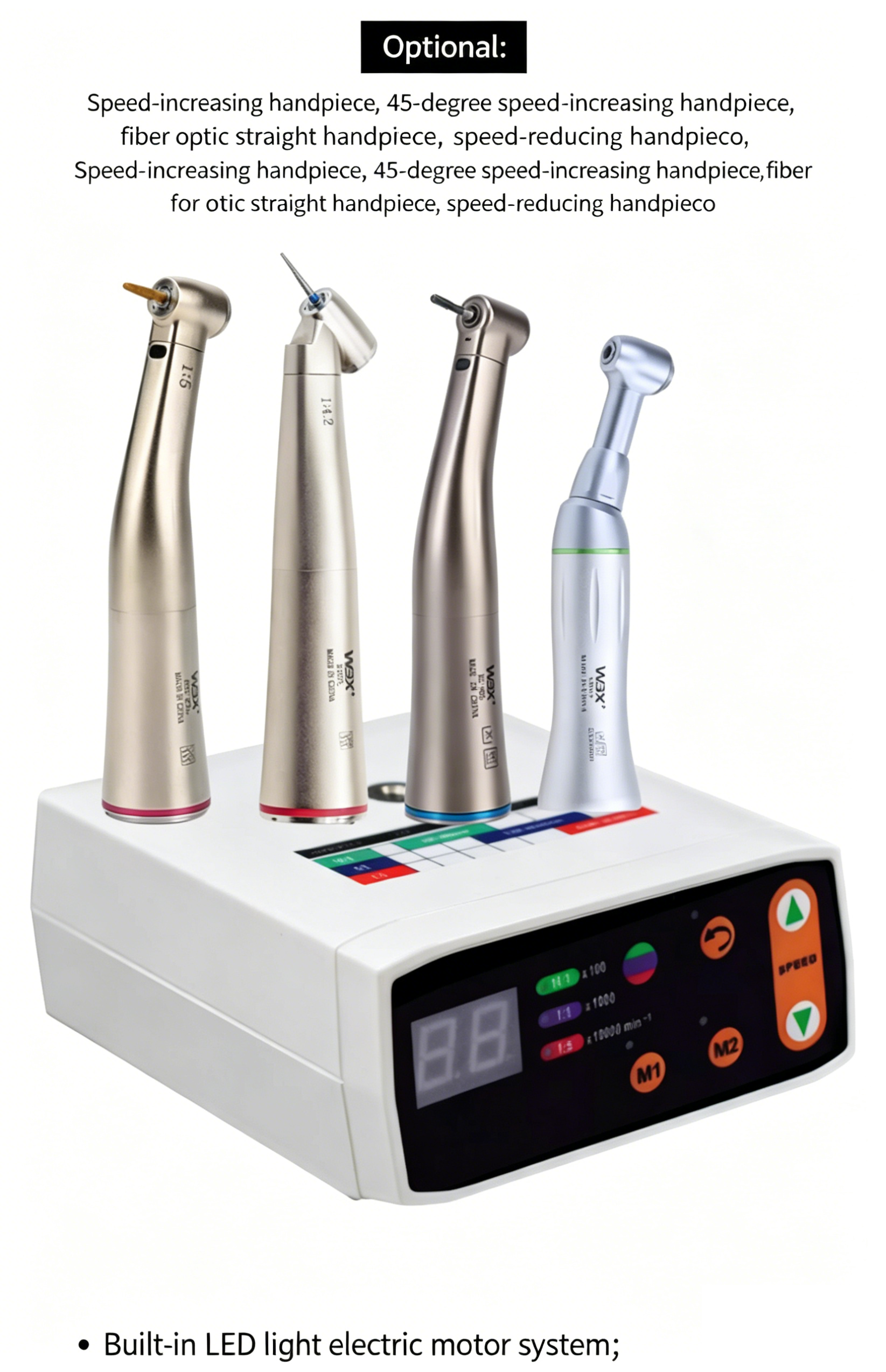
Advantages of Application in Minimally Invasive Repair
In the field of minimally invasive dental restoration, the flexibility of this system is particularly evident. When paired with fiber optic phones for veneer preparation or embedded repair, the stable low-speed output of the motor works in conjunction with the phone's optical lighting to provide doctors with clear surgical field and precise cutting control. This combination helps to preserve healthy dental tissue to the maximum extent possible, achieving true minimally invasive preparation.
Clinical value of multi scenario coverage
From pulp preparation in dental pulp treatment, to tooth preparation in restorative treatment, and to cavity formation in implant surgery, the same motor can cover the entire process by replacing different phones and adjusting the corresponding speed ratio. This integrated solution not only improves equipment efficiency, but also ensures operational stability and tactile consistency at different treatment stages through a unified power platform.
The multi interface compatibility and multi-stage variable speed capability of dental electric motors reflect the current trend towards integrated and intelligent development of dental equipment. By adapting multiple treatment tools through a power core, it not only optimizes the clinical workflow, but also provides a reliable technical foundation for achieving precise and minimally invasive dental treatment. In today's rapidly advancing dental technology, the flexible and stable characteristics of this equipment are gradually becoming one of the considerations for modern dental institution equipment configuration.